
Title:
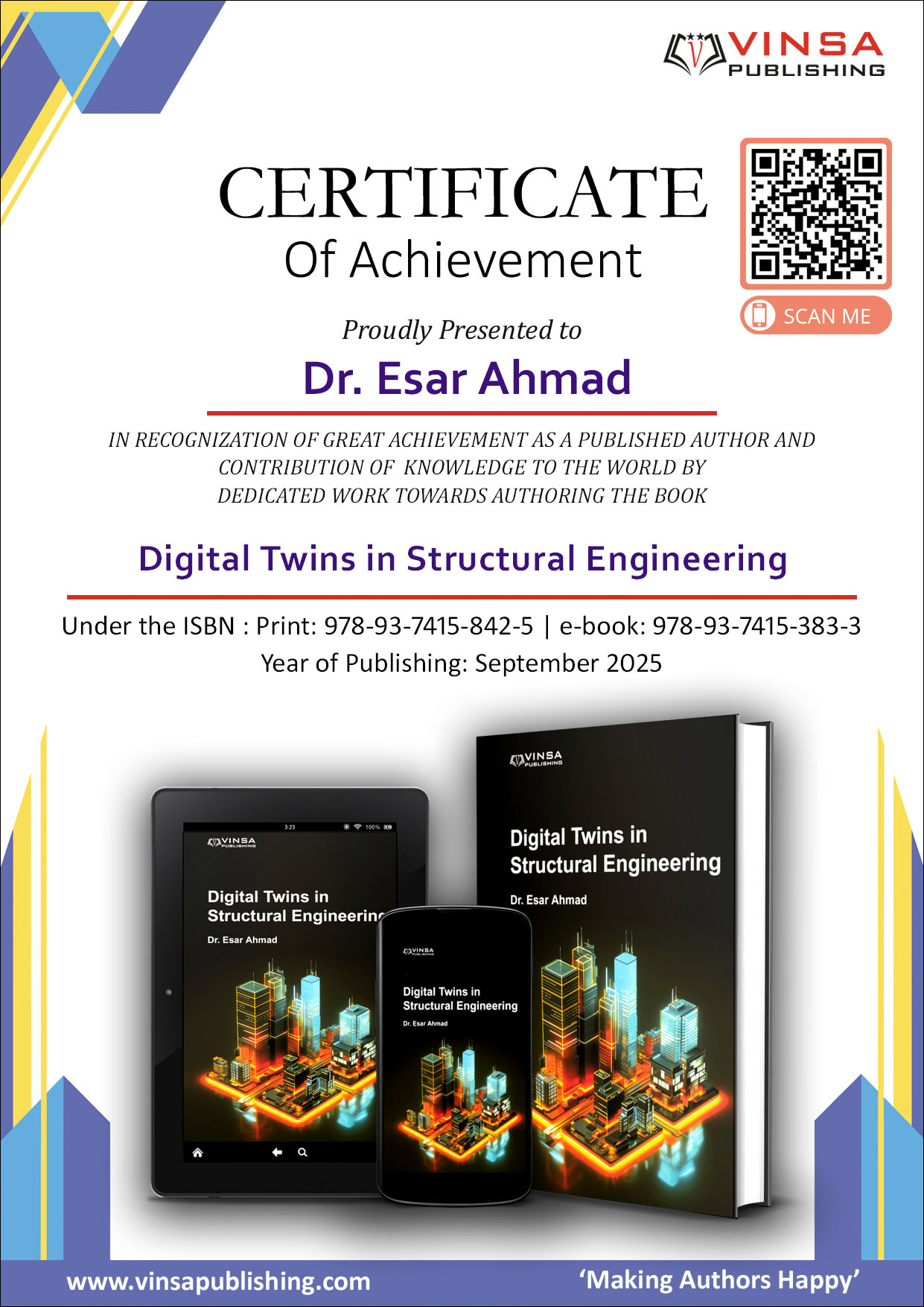
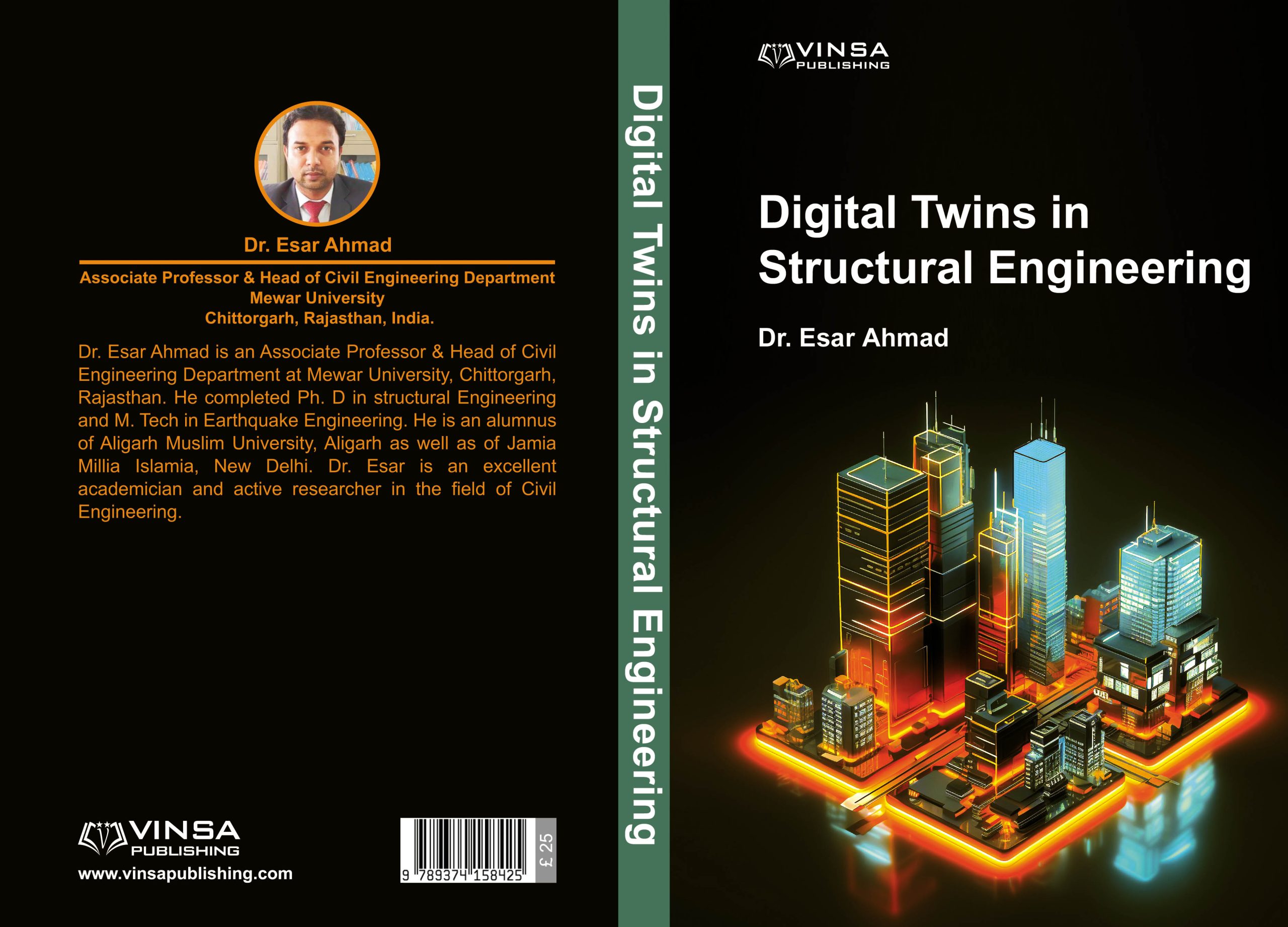
Digital Twins in Structural Engineering
Author:
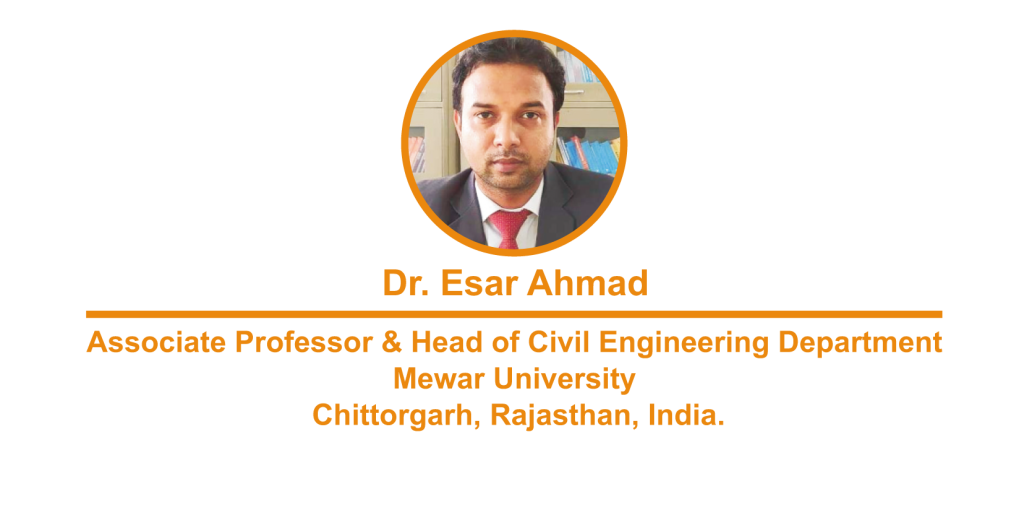
Dr. Esar Ahmad
ISBN:
Print: 978-93-7415-842-5 | e-book: 978-93-7415-383-3
Author’s Special Note:
About Author:
Dr. Esar Ahmad is an Associate Professor & Head of Civil Engineering Department at Mewar University, Chittorgarh Rajasthan. He completed Ph. D in structural Engineering and M. Tech in Earthquake Engineering. He is an alumnus of Aligarh Muslim University, Aligarh as well as of Jamia Millia Islamia, New Delhi. Dr. Esar is an excellent academician and active researcher in the field of Civil Engineering
“Digital Twins in Structural Engineering”
This book serves as both a platform and a practical guide for this new paradigm. It is written for the forward-thinking structural engineer, the ambitious student, the innovative researcher, and the dedicated project manager who recognizes that the future of our field is no longer about building physical structures alone, but about creating and managing their digital reflections.
In the archives of structural engineering, a constant thread has been the pursuit of a more perfect understanding of our creations. For centuries, our profession has been defined by the careful balance of theory and practice—calculating forces on paper, testing materials in labs, and observing the real-world behavior of our buildings, bridges, and infrastructure. We have moved from the stone and timber of antiquity to the steel and reinforced concrete of the modern world, all the while refining our craft through observation, analysis, and a reliance on proven methods.
Yet, a profound shift is underway. The digital revolution, which has reshaped nearly every aspect of our lives, has finally come of age in our industry, promising to close the gap between the theoretical and the tangible. We are no longer limited to static blueprints and post-construction inspections. We are now able to create dynamic, living digital counterparts to our physical assets—digital twins. These are not just three-dimensional models; they are intelligent, data-driven replicas that grow and evolve in tandem with their physical counterparts, offering unprecedented insights into performance, safety, and longevity.
We will explore the fundamental concepts of digital twin technology, from the data capture and modeling techniques that form their foundation to the advanced simulations and predictive analytics that unlock their true potential. We will move beyond the theoretical and into the practical, examining case studies of successful digital twin implementations on real-world projects, large and small.
By embracing this technology, we can move from reactive to proactive engineering. We can predict maintenance needs before they become critical failures. We can optimize designs for performance and sustainability with a level of precision previously unimaginable. We can enhance safety by running virtual stress tests on structures that are already in use. The digital twin promises not just to make our jobs easier, but to make our structures safer, more efficient, and more resilient.
This journey is just beginning. The pages that follow are a roadmap to a future where every beam, every column, and every rivet has a voice, transmitting its health and history to a digital counterpart. This book is an invitation to join the vanguard of a new era—an era where the art and science of structural engineering are not just about building, but about intelligently managing a symphony of digital and physical realities.
Thank you,
Dr. Esar Ahmad
Author